
Somewhere between your last paycheck and your first Social Security check, there is a window. Your income drops. Your tax bracket drops with it. And most people walk right past it without noticing.
If you spent a career filling a 401(k) or a traditional IRA, that window may be the cheapest chance you ever get to deal with a tax bill you have been quietly building for decades. The tool for the job is the Roth conversion. Whether a Roth conversion before Social Security makes sense comes down to timing, and the timing is the whole story.
What Is a Roth Conversion?
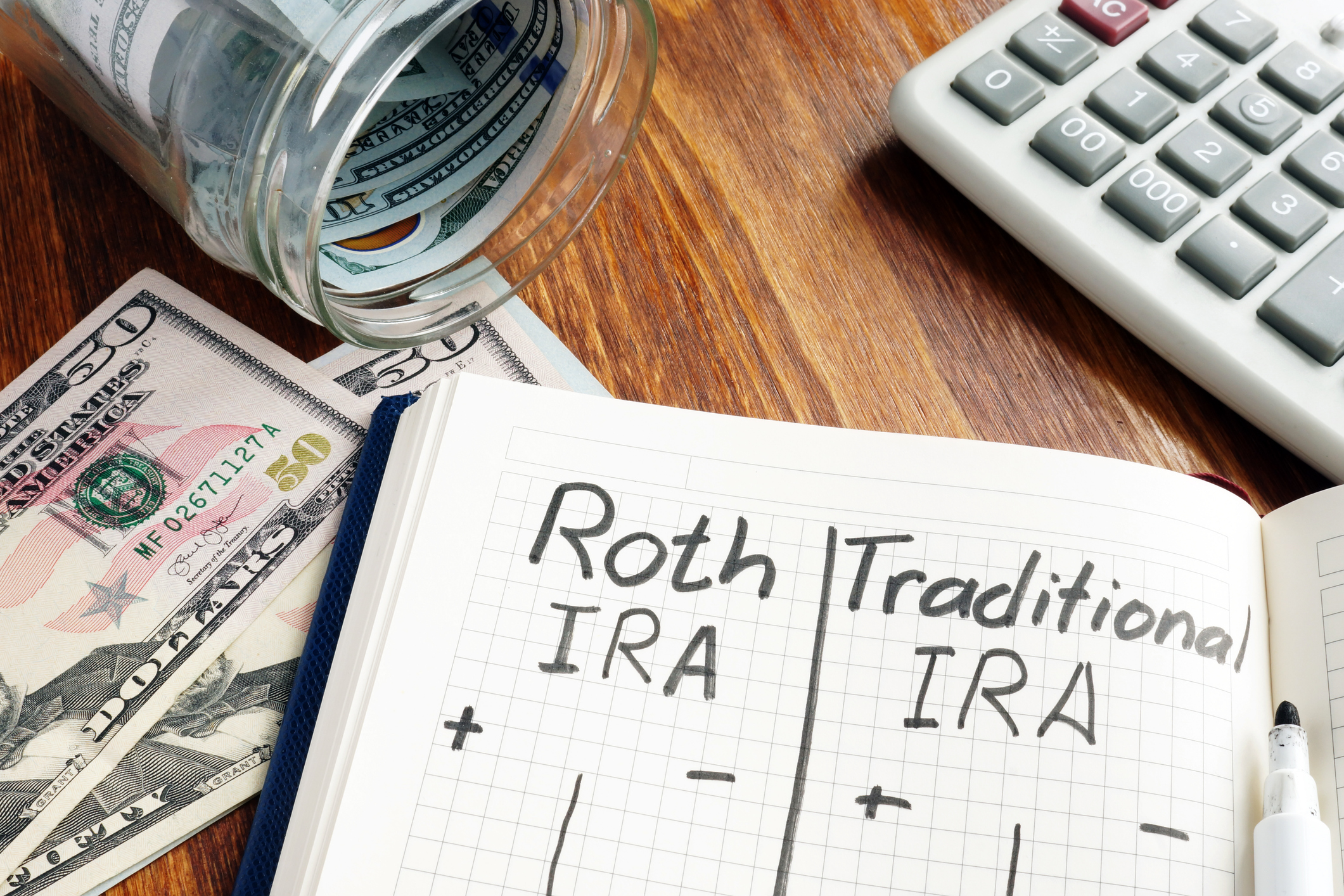
A Roth conversion, sometimes called a Roth IRA conversion, means moving money from a traditional IRA or 401(k) into a Roth IRA. You pay ordinary income tax on the amount you move, this year, at this year’s rates. In exchange, that money and its future growth can generally come out tax free later, as long as the Roth rules are met, including the five year rule.
Think of it as paying your tax bill early, on purpose, at a price you pick. The question is never whether the IRS gets paid on that traditional IRA. It does, eventually. The question is when, and at what rate.
One of the Roth conversion rules worth knowing up front: conversions are permanent. Since 2018 you cannot undo one. That makes the planning before the conversion matter far more than anything after it.
The Window Nobody Talks About
Picture the typical path. You retire at 62 or 65. The paychecks stop. You live on cash and taxable savings, and maybe delay Social Security to earn a bigger check later. For a few years, your taxable income can be unusually low.
Those are the gap years. They run from your last paycheck until Social Security and required distributions start adding income back to your return.
Low income means low brackets. Low brackets mean you may be able to move money out of a traditional IRA at rates that will not look this good again.
Three Things That Quietly Raise Your Taxes Later
The gap years matter because of what shows up after them.
Social Security. Up to 85 percent of your benefit can become taxable once your combined income passes $25,000 for a single filer or $32,000 for a married couple. Those thresholds were set decades ago and are not adjusted for inflation, so more retirees cross them every year. Convert before benefits start and you are not stacking taxable income on top of a benefit. Convert after, and you may be.
Required minimum distributions. The government eventually makes you take money out of traditional accounts. That starts at age 73 if you were born from 1951 through 1959, and at age 75 if you were born in 1960 or later. A big IRA tends to mean big required distributions, arriving whether you need the money or not, on top of Social Security.
Medicare premiums. Higher income can trigger surcharges, called IRMAA, on Medicare Part B and Part D. For 2026 the first threshold is $109,000 of income for a single filer and $218,000 for a married couple, and Medicare looks back two years. A conversion at 63 can show up in your premiums at 65. Conversions completed before 63 fall outside that lookback entirely, which makes the pre-Medicare window especially valuable. The first Part B surcharge alone is about $81 a month per person.
Together, these three can turn a modest tax bill into a much bigger one, right when you have the least room to adjust.
What This Looks Like in Practice
Consider a married couple, both 62 and newly retired. They plan to wait until 70 to claim Social Security, and they earn $20,000 a year in interest from savings. Most of their remaining wealth sits in traditional IRAs.
For 2026, the standard deduction for a married couple is $32,200, so their $20,000 of interest is effectively untaxed. Add a conversion of about $113,000, and their taxable income lands right at the top of the 12 percent federal bracket. The federal tax on that conversion would be roughly $11,600, an average of about 10 percent on the money moved.
Now add your state. In Colorado, the conversion is taxed at a flat rate, currently 4.4 percent, which on this couple’s roughly $100,800 of taxable income comes to about $4,400, before any subtractions that may apply. California works differently. It taxes a conversion as ordinary income at graduated rates that start at 1 percent and climb to 12.3 percent, so the same couple could see roughly $4,000 to $5,000 of California tax, with the top slice of the conversion landing somewhere around the 6 to 8 percent range. California also does not tax Social Security benefits. And if a move between the two states is on the horizon, where you live when you convert becomes part of the math, because the two states can price the same conversion very differently.
Now compare that with the same dollars coming out years later as required distributions on top of Social Security, potentially at 22 percent or higher. Same money. Potentially a very different price.
Hypothetical illustration for discussion purposes only. Not a client, and not a recommendation. Individual circumstances and results will vary.
Why the First Year of Retirement Can Be the Sweet Spot
This is where the Spend bucket does more than pay the bills. Picture a client who retires with about $60,000 in money market funds in a regular taxable account, set aside in Spend to cover that first year of living expenses.
Now look at what that year’s tax return shows. No paycheck. No Social Security yet. No required distributions for years. The only income is the interest and dividends on that cash, a couple of thousand dollars at today’s money market yields. The $60,000 itself is not income when you spend it. It is your own money coming back out. After the standard deduction, the return can show almost no taxable income at all.
That leaves a wide stretch of empty, low bracket space, and a conversion fills it. In the hypothetical above, a conversion of roughly $130,000 would take the couple right up to the top of the 12 percent federal bracket for about $11,500 of federal tax.
Here is the part that makes the framework click. The same bucket that pays for life can pay for the tax bill. Size Spend for the year’s living costs plus the conversion tax, and not a dollar of the IRA has to be used to settle up. The full amount you convert keeps working for you, on its way to Secure.
A few things to check first. If you retire partway through the year, that year still holds some wages and possibly a bonus, severance, or a payout of unused vacation, so the first full calendar year is often the cleaner one. If you retire before 65 and buy your own health insurance, the added income from a conversion can shrink premium subsidies. And because of the Medicare lookback, a conversion at 63 can show up in your premiums at 65.
It also does not have to be a one year event. Spend covers three to five years, so the gap can stretch just as long. Many clients convert a measured amount each year, a Roth conversion strategy often called filling the bracket, using the room left in their bracket, until Social Security or required distributions arrive.
Hypothetical illustration for discussion purposes only. Assumes about $60,000 held in money market funds earning roughly 4 percent in a taxable account, and 2026 federal brackets for a married couple filing jointly. Individual circumstances and results will vary.
So When Does a Roth Conversion Make Sense?
It comes down to one idea: a tax differential. A conversion tends to make sense when your tax rate today is meaningfully lower than the rate you expect to pay on that same money later. If the two rates are about the same, there is not much to gain. If today’s rate is higher, converting can cost you.
These are the most common situations where that gap shows up.
The low income window. This is the stretch we have been talking about, between your last paycheck and the start of Social Security and required distributions. For many people it falls somewhere between the early 60s and the early 70s. Income can drop sharply, and a household with a large portfolio can find itself in the 12 or 22 percent bracket for a few years. Filling those lower brackets is often where the most useful Roth conversion work in retirement gets done.
Required minimum distributions. Once RMDs start, at 73 or 75 depending on your birth year, the withdrawals are mandatory, and the required percentage increases each year. Stacked on top of Social Security, they can push you into a higher bracket. If part of your future RMDs would be taxed at 22 percent and you can convert some dollars at 12 percent today, that 10-point gap is the differential at work.
The loss of a spouse. When one spouse passes away, the survivor eventually files as a single taxpayer. The brackets get narrower and the standard deduction shrinks, while much of the income, like RMDs, often continues. Converting while both spouses are alive and joint brackets apply is an opportunity that is easy to underestimate, especially when there is a big age gap between spouses.
Here is how fast that can change. A married couple with $90,000 of taxable income sits in the 12 percent federal bracket. If a survivor has that same $90,000 of taxable income filing single, most of it lands in the 22 percent bracket.
Hypothetical illustration for discussion purposes only, using 2026 federal brackets. Individual circumstances and results will vary.
Inherited IRAs. Plenty of people inherit an IRA at or near retirement. For most heirs who are not spouses, the old stretch IRA is gone and the account must be emptied within ten years. Add that on top of your own RMDs and it can become a heavy tax load. It is worth factoring in, though never count on an inheritance.
Leaving traditional IRA money to your children. Some people say their kids are lucky to get anything at all, and that is a perfectly valid philosophy. But if you spend modestly and expect to leave a meaningful traditional IRA behind, the math is worth running. Your children will face the same ten year rule, often in their peak earning years, with the withdrawals stacked on top of their paychecks. Paying the tax now at your rate can leave more in the family and less going to the IRS.
One practical requirement. Whatever the reason, have cash outside the IRA to pay the tax. Paying it from the IRA itself shrinks the amount that grows tax free, and if you are under 59 and a half it can create extra tax on top.
When They Usually Do Not
Your income will be lower later than it is now. Paying tax early only helps if early is cheaper.
The conversion would cross a line you care about. That could be an IRMAA threshold, or the income level where health insurance subsidies shrink if you buy coverage before Medicare.
You would have to take the tax from the IRA itself. That usually works against the whole point.
You plan to leave the IRA to charity. Traditional IRA dollars can go to charity without income tax. Converting them first may just create a tax bill nobody needed.
One more piece of fine print. For people 65 and older, a new $6,000 senior deduction shrinks as income rises above $75,000 for singles and $150,000 for couples, and it is scheduled to run through 2028. Conversion income counts toward that phaseout, so a conversion can cost more than the bracket alone suggests.
How This Fits into Spend, Grow, Secure
Every dollar has a job, and a Roth conversion is really about moving dollars into the right job.
Spend covers the next three to five years of spending. This is where the cash to pay the conversion tax should come from, so you never have to touch the IRA to settle the bill. In the gap years it also keeps your taxable income low, because spending cash you already own does not create income.
Grow holds the longer term investments, and often a large share of the traditional IRA. Conversions draw from here.
Secure is the money you do not plan to spend at all, the legacy assets such as a Roth IRA or real estate. A Roth conversion is one of the cleanest ways to build Secure. You pay the tax now, so the people who come after you inherit those dollars without an income tax bill attached.
Once every dollar has a job, the question gets simpler. It stops being “should I convert?” and becomes “which dollars are meant to end up in Secure, and what is the cheapest year to get them there?”
Getting Your Own Numbers Right
The right answer depends on your brackets, your timeline, your Social Security plan, and what you want to leave behind. A conversion that makes sense for a couple retiring at 62 may be a mistake for someone already collecting benefits. Whether you should do a Roth conversion is a question to model with your real numbers, year by year, not to settle with a rule of thumb.
If you are within a few years of retirement, or already in the gap, that conversation is worth having before the window closes.
This material is provided for educational purposes only and is not intended as individualized tax, legal, or investment advice. Tax laws and regulations change, and individual circumstances vary. Consult your tax professional regarding your specific situation.
Frequently Asked Questions About Roth Conversions
What is a Roth conversion?
A Roth conversion moves money from a traditional IRA or 401(k) into a Roth IRA. You pay ordinary income tax on the amount converted now, and that money and its growth can generally come out tax free later.
Should you do a Roth conversion before Social Security?
It often makes sense when your tax rate in the years before Social Security and required distributions is meaningfully lower than the rate you expect to pay later. Those gap years can offer low brackets that may not return.
Can you undo a Roth conversion?
No. Since 2018, Roth conversions are permanent.
Does a Roth conversion affect Medicare premiums?
It can. Medicare looks back two years at your income to set IRMAA surcharges, so a conversion at 63 can raise your premiums at 65.
How should you pay the tax on a Roth conversion?
Use cash held outside the IRA. Paying from the IRA shrinks the amount that grows tax free, and if you are under 59 and a half it can create extra tax.