
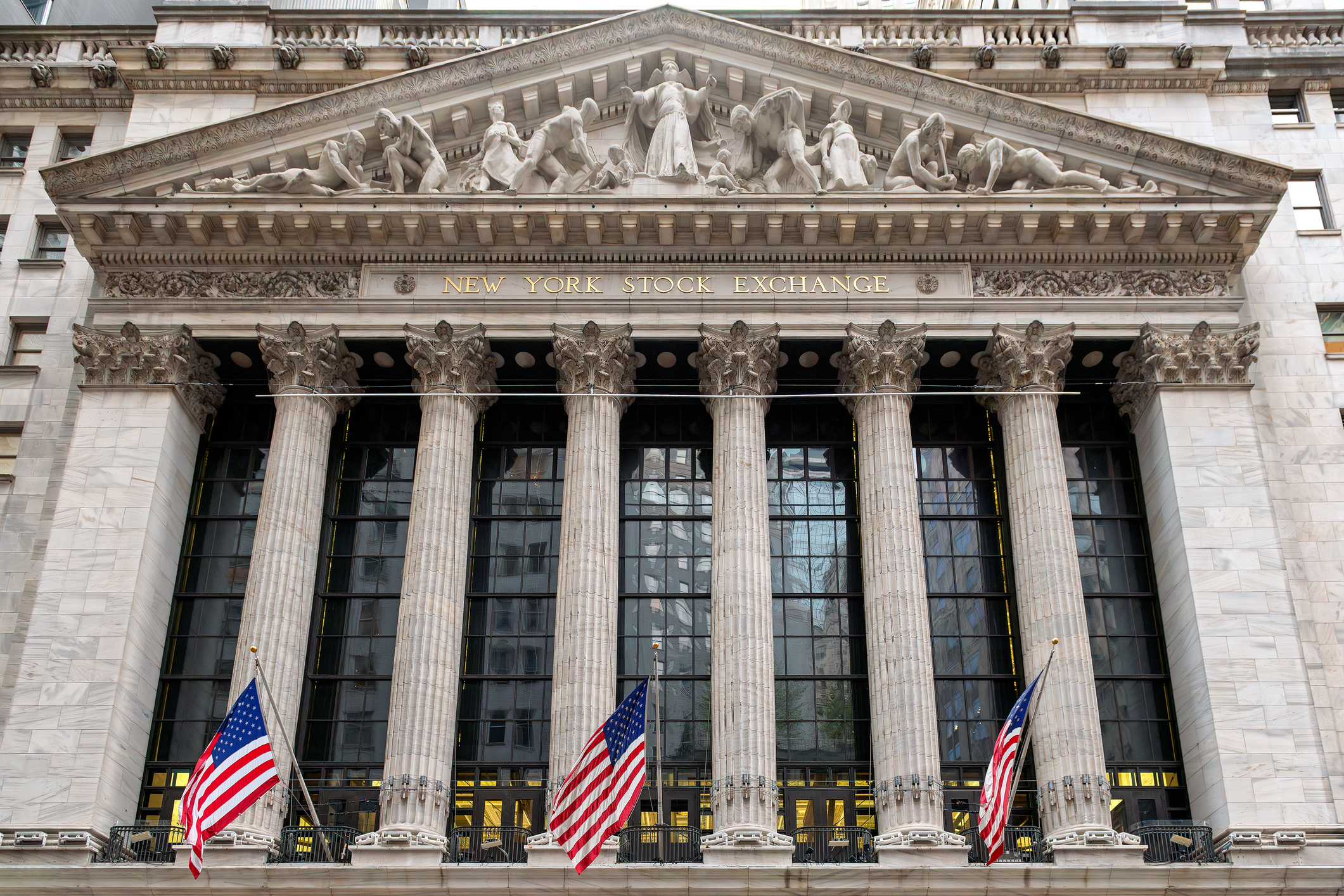
A Quarter Defined by Record Earnings, a Historic Wave of IPOs, and a New Fed Chair
Three months ago, this letter described a market that had changed character in a hurry. War, an oil shock, a sharp selloff in software stocks, and rising stress in private credit all hit at once. The second quarter changed character again, this time for the better. The year began as a story about earnings and artificial intelligence. Then it detoured into geopolitics. In the second quarter, it came roaring back to its original plot.
Corporate profits proved even stronger than expected. The largest technology companies regained their footing. And the major indexes did not simply recover their first quarter losses. They blew past them to new record highs. It was, by almost any measure, an exceptional three months.
By the Numbers (First Half of 2026)
- S&P 500: up 9.55%, its best quarter in more than six years
- Nasdaq Composite: up 12.79%
- Dow Jones Industrial Average: up 8.85%
- Semiconductors: up 82%, best first half on record
- S&P 500 second quarter earnings growth: roughly 22% (FactSet estimate)
- 10 Year Treasury yield: about 4.5%
- Crude oil (Brent): near $70, down roughly a third from its wartime peak
- Consumer prices (May): up 4.2% from a year earlier, the highest in three years; core inflation up 2.9%
These are first half figures. The second quarter rally more than reversed a first quarter in which the S&P 500 fell 4.3%, the Dow 3.2%, and the Nasdaq 7.0%.
Revisiting Last Quarter’s Three Questions
These letters are meant to be a running conversation. So we will begin each recap by revisiting the questions we posed three months earlier. Here is how the first quarter’s questions actually played out.
1. Would the Iran war calm down, or would oil remain the market’s biggest wildcard?
It calmed down, though not smoothly. A ceasefire framework and a temporary 60 day agreement came together over the quarter. Crude oil retreated sharply. Brent fell roughly a third from its wartime peak, to around $70. That relief was a major tailwind for stocks.
But peace remains fragile. Negotiations were abruptly paused late in June. Shipping through the Strait of Hormuz has been slow to return to normal. Oil is no longer the dominant story it was in the first quarter. But it remains a swing factor for both inflation and Fed policy.
2. Was the selloff in software stocks just a valuation reset, or the start of a broader repricing?
Mostly a reset. The market recovered to record highs. But the disruption concern did not disappear so much as mature. The clearest sign that AI is reshaping software came from Oracle. The company disclosed that it had cut roughly 21,000 jobs over the past year. It tied those reductions directly to its adoption of AI.
The takeaway is nuanced. The index bounced back. But a new question now hangs over the sector. Which software companies does AI help, and which does it hurt? That judgment is now a permanent part of how these stocks are valued.
3. Would private credit settle down, or would the worries spread?
Neither, cleanly, and this remains the quarter’s quietest risk. Private credit is the fast-growing business of lending to companies outside the traditional banking system. Its stress persisted this quarter, and in places it deepened. Second quarter lending by these funds fell roughly 40%. The default rate on the loans touched a record near 6% earlier in the quarter. At least one large manager even limited withdrawals, after investors asked to pull out more money than the fund allowed.
Even so, most large institutions are not alarmed. They describe it as a test of liquidity and confidence, not a threat to the whole system. The strain sits in a handful of funds that are difficult to exit. Public bank and bond markets stayed calm and orderly throughout. It did not blow up. It also did not get the all clear.
Story #1: Earnings on a Tear, and the AI Spending Boom Pays Off
Last quarter, investors were asking a skeptical question. Could the enormous spending by big technology companies ever justify the market’s excitement about AI? This quarter, earnings season went a long way toward answering it.
The numbers were remarkable. FactSet estimates that S&P 500 companies grew their second quarter earnings by roughly 22% from a year earlier. That beat the 19% expected at the start of the quarter. It marked a rare second straight quarter of growth above 10%. Importantly, this was not only an AI story. Banks benefited from interest rates that have stayed high. Energy producers capitalized on elevated oil prices. Healthcare companies saw strong sales from newer treatments. But AI was the engine.
The Semiconductor Surge
The semiconductor group had its best first half on record. It was the exclamation point on the quarter. Nvidia reported record quarterly revenue of roughly $81.6 billion in May, up about 85% from a year earlier. Its data center business alone brought in nearly $39 billion. Then, in the final days of the quarter, Micron did it one better. Record profits from demand for AI memory chips pushed the company past $1 trillion in market value. The stock is up more than 700% over the past year.
Management also signaled that the shortage is not a passing phase. Chief Executive Sanjay Mehrotra said the company expects chip supply to stay constrained “beyond 2027.” That reframes the memory cycle as a lasting shift, not a temporary spike. In a single sentence, that is the bullish case.
Following the Money
Behind the chipmakers sits a historic wave of spending. By some estimates, five of the largest technology companies have committed about $650 billion to data centers this year alone. Those companies are Amazon, Alphabet, Meta, Microsoft, and Oracle. That money does not stay in Silicon Valley. It flows into what many call the physical economy. Think steel, copper, power equipment, networking gear, and heavy construction.
All of it is needed to build and run these facilities. So demand has been strong well beyond the obvious names like Nvidia, Broadcom, and Taiwan Semiconductor. The suppliers and builders further down the chain are benefiting too. For investors worried that the market has become too narrow, that broadening is worth watching.
Story #2: A Historic Wave of IPOs Arrives
Earnings were the substance of the quarter. The calendar of initial public offerings, or IPOs, was its spectacle. It was also a genuine piece of market history.
SpaceX went public in June in the largest IPO ever recorded. It raised roughly $75 billion at a value near $1.75 trillion. That topped the previous record set by Saudi Aramco. The debut showed how this market can cut both ways. The stock was priced at $135. It briefly jumped toward $225 within days. Then it fell back to the $150s by quarter end, as investors weighed its lofty valuation.
The AI Labs Line Up
More important for the long run, the two largest AI labs filed to follow. Anthropic filed its IPO paperwork confidentially in early June. Its Claude models sat at the center of last quarter’s software scare. The filing came just days after a funding round valued it near $965 billion. That put it narrowly ahead of its chief rival. OpenAI, last valued around $852 billion, filed its own confidential paperwork about a week later.
So three of the most watched companies in technology could go public within months of one another. That is a concentration of blockbuster deals not seen since the internet boom of the late 1990s. The comparison cuts both ways. It reflects extraordinary investor appetite. It is also the kind of backdrop that, historically, rewards discipline over enthusiasm.
Story #3: A New Fed Chair Meets Stubborn Inflation
The quarter also brought a changing of the guard at the Federal Reserve. Kevin Warsh led his first policy meeting as chair in June. Markets read his debut as clearly hawkish. In plain terms, that means inclined to keep interest rates high to fight inflation.
A Hawkish First Meeting
The committee held its benchmark interest rate steady, in a range of 3.50% to 3.75%. That was expected. But the updated forecasts told the real story. Back in March, policymakers had penciled in a rate cut for 2026. Now most expect rates to hold steady or move higher by year end. Several openly favored raising them.
Warsh himself declined to submit a rate forecast. That fits his longstanding skepticism of giving markets too much guidance. He also signaled a broader effort to reform how the Fed communicates. Stocks fell and bond yields rose as investors digested the shift.
Why Inflation Forced the Turn
The reason for the hawkish turn was simple. Inflation ran hot. Consumer prices in May were up 4.2% from a year earlier. That was the highest reading in three years. The spike in energy costs from the Iran conflict drove much of it.
The more encouraging detail sat underneath the headline. Core inflation strips out volatile food and energy prices. It was up 2.9%, and it actually cooled from the month before. If the oil shock keeps fading, price pressures may fade with it. In an unusual footnote, former Chair Jerome Powell stayed on as a Fed governor. He voted with the committee and promised to keep a low profile.
The Economy: Records on Wall Street, Caution on Main Street
The economy itself sent mixed signals. Growth softened at the edges and hiring lost some momentum. Yet corporate profits reached near record levels. The most telling gap was between markets and households. Even as the indexes set records, consumer confidence surveys were weak. One reading even touched a record low during the quarter. Families continued to feel the sting of higher prices. That gap between rising asset prices and everyday experience is worth watching. It rarely lasts in one direction for long. As you harvest gains or adjust your asset allocation at these market highs, implementing proactive measures to reduce taxes in retirement is crucial to keeping more of your hard-earned money.
Market Leadership Flipped Again
Leadership was nearly a mirror image of the first quarter. Technology led the way, and semiconductors most of all. Energy was strong too. The more defensive corners of the market lagged. The Magnificent Seven had lost their shine in the first quarter. This quarter they largely regained their footing, as earnings confirmed their dominance. The index itself is being reshaped around these winners. Alphabet, the parent of Google, is set to join the Dow Jones Industrial Average. It is a neat symbol of how thoroughly AI now defines market leadership.
That dominance is a double-edged sword. When a handful of companies drive so much of the index, their strength lifts everything. But so does their weakness, as the final days of the quarter reminded us. With tech leading the charge, portfolios can easily become overweight in growth sectors, making it an essential time to evaluate if rebalancing your portfolio in a bull market is the right move to protect your gains.
A Note of Caution as the Quarter Closed
For all the records, the last stretch of June carried a warning. A sharp selloff hit chip stocks. The Nasdaq and S&P 500 fell as investors questioned whether all that AI spending will earn its money back. The worry grew louder when a major Asian memory maker signaled it was slowing production of advanced chips. Micron’s blowout results were an immediate counterpoint. Still, the episode exposed how much the market is priced for perfection. That is true in exactly the names that led it higher, and it leaves little room for disappointment.
The Shortage Has a Flip Side
The same shortage cuts the other way, and it landed in the final days of June. The memory boom is minting record profits for Micron. But it is now raising costs for the companies that must buy those chips. Apple raised prices on its Macs and iPads by as much as $500 on some models. It was an unusually broad move. The company pointed squarely at the surge in memory and storage costs from the AI buildout.
A base MacBook Air jumped from $1,099 to $1,299. Analysts expect the iPhone to follow this fall. “We have never seen a component price increase this much, this quickly,” the company said. Microsoft raised the price of its Xbox consoles for the same reason. Apple shares fell roughly 5% on the news. The lesson is simple. One company’s pricing power is another company’s rising cost. And the AI boom is now reaching the checkout aisle.
Now add the other risks. The Fed is leaning toward higher rates. The ceasefire in the Middle East is fragile. Private credit stress never fully cleared. Put together, the setup for the second half looks more delicately balanced than the first half returns alone suggest.
Three Questions for the Second Half of 2026
1. Are earnings strong enough to justify the prices, or has the market priced in perfection?
The late June selloff in chip stocks was the first real test of this question. Micron’s quick rebuttal was the counterpunch. With so much riding on the AI winners, the room for disappointment is thin.
2. Does the ceasefire with Iran harden into a lasting peace, letting oil and inflation keep falling, or does it fall apart?
This single variable still shapes the Fed’s path. It largely determines whether the Fed can eventually cut rates, or stay boxed in.
3. Does the Fed actually raise rates?
This is a genuinely new situation. A central bank leaning toward tightening, at record highs, faces a White House that wants lower rates. How Warsh handles it could be the defining economic story of the back half. So could how markets absorb it.
And one more to watch. Anthropic and OpenAI may move from confidential filings to actual pricing. Will that flood of new stock mark a fresh leg higher for the AI trade, or a top?
Final Thought
The second quarter was a reminder. Markets can change character just as quickly on the way up as on the way down. A quarter defined by war and fear gave way to one of record earnings and historic IPOs. The indexes reached new record highs. That is worth celebrating, with clear eyes. The same concentration that powered these gains is also the market’s chief vulnerability. The closing days of June showed how fast the mood can turn. Expectations are now set to perfection.
None of this changes the long-term case for staying invested. It does argue, once again, a simple point. In quarters like this one, discipline matters far more than headlines. Rather than letting short-term market noise dictate your financial choices, get a clear diagnostic of where you stand. Request your custom, free retirement analysis today to ensure your plan is set up to weather any economic cycle.
This commentary is provided for informational purposes only and does not constitute investment, tax, or legal advice, or a recommendation to buy or sell any security. Figures come from sources believed to be reliable, including FactSet, company earnings reports, the Federal Reserve, the Bureau of Labor Statistics, and financial news outlets such as Reuters and CNBC, but accuracy is not guaranteed and figures should be independently verified. Past performance is not indicative of future results. Index returns reflect the period noted, do not reflect the deduction of any fees or expenses, and cannot be invested in directly.