
HIGHLANDS RANCH, COLORADO
Retirement Planning in Highlands Ranch, Colorado
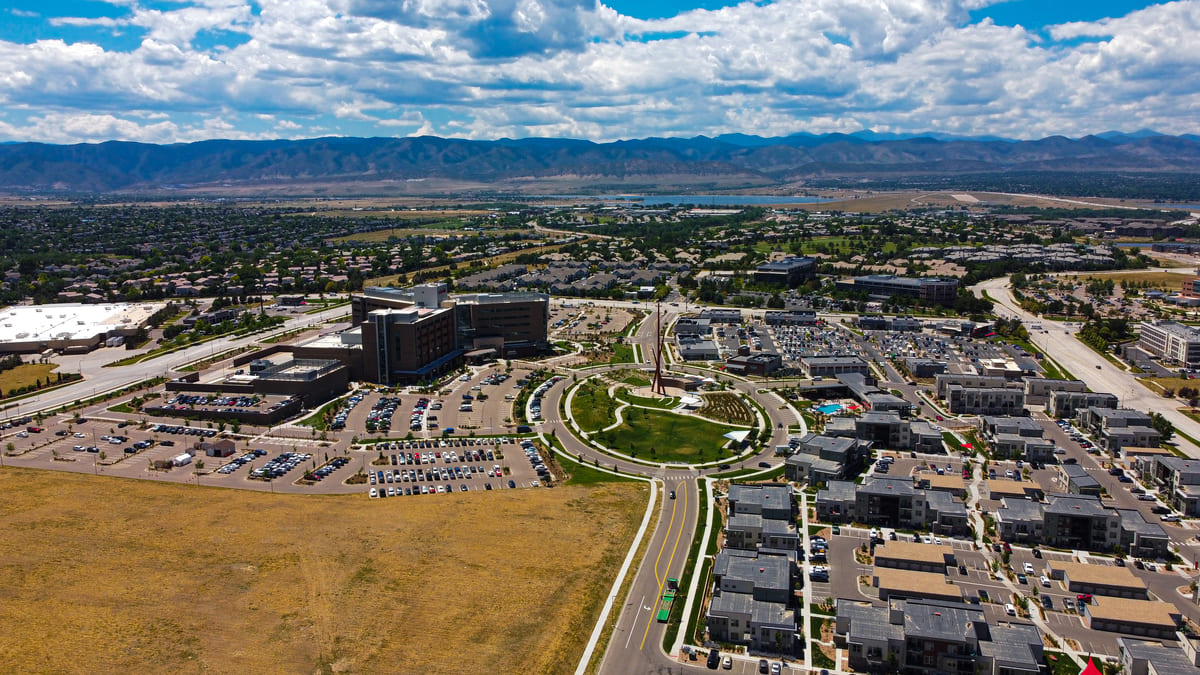
Highlands Ranch is the largest community in Douglas County, and one of the most affluent family-oriented suburbs in the state. Most households here are still years from retirement. Two incomes, a mortgage, a bonus that shows up every spring. The plan that gets built now is the one that decides whether all of that adds up later.
Our Colorado office sits at Fiddler’s Green in Greenwood Village, a short drive from Highlands Ranch.
WHAT WE SEE HERE
Three Things We Hear Often in Highlands Ranch
Highlands Ranch is not a retiree heavy community. It is a heavy family one, with a lot of households still a decade or more from the finish line. That changes what good planning looks like here.
SITUATION ONE
Your income comes with a bonus, not just a salary
Highlands Ranch’s largest employment sectors are professional services, finance and insurance, and healthcare. A lot of the households we work with here are paid in more than one piece: base salary, an annual bonus, sometimes a partnership distribution or deferred compensation on top.
That kind of income is harder to plan around than a flat paycheck, because the timing and size of it can move your tax bill more than your spending ever does.
SITUATION TWO
You have significant equity in your home, and no real plan for it
Homeownership here runs well above the national average, and home values have climbed enough that many households now have a meaningful share of their net worth sitting in their house.
That is not a problem by itself. It becomes one if a retirement plan treats home equity as an afterthought instead of an asset with real decisions attached to it, like whether to downsize, when, and what that does to the rest of the plan.
SITUATION THREE
You are not retiring yet, and that is exactly why this matters
The median age in Highlands Ranch is still in the early forties, and most of the households we meet here are years, not months, from retirement. That is an advantage, not a reason to wait.
The earlier a plan accounts for maximizing tax advantaged savings, coordinating two incomes, and avoiding the small decisions that quietly cost real money over a decade, the less there is to fix later.
COLORADO SPECIFICS
What Changes When You Retire Here
Colorado applies a flat state income tax rather than graduated brackets. That single difference reshapes the arithmetic of a retirement plan written anywhere else, because the cost of filling a bracket no longer climbs the way it did.
Colorado also allows certain qualifying taxpayers to subtract eligible pension, annuity, IRA, and Social Security income from Colorado taxable income, subject to the applicable rules and limitations. For households still years from retirement, the more immediate question is usually how bonus income, deferred compensation, and account withdrawals interact with these same rules once the time comes.
The tax rules change over time, which is why we model your actual numbers rather than relying on a fixed retirement formula.
HOW THE FRAMEWORK APPLIES
A Highlands Ranch Example
Our Redwood Retirement Framework organizes retirement assets around three jobs: Spend. Grow. Secure.
Consider a dual income couple in their mid-forties, one earning a base salary plus an annual bonus, the other several years into a deferred compensation plan through a professional services firm.
Spend
Spend covers current living expenses, funded by predictable salary income.
Grow
Grow absorbs the bonus and deferred compensation once it vests, invested for the fifteen to twenty years still ahead.
Secure
Secure holds the portion of savings and home equity they do not want exposed to a downturn as retirement gets closer.
None of it is complicated on its own. Coordinated together, it becomes an actual plan instead of three separate income streams doing their own thing.
Hypothetical illustration for discussion purposes only. Individual circumstances and results will vary.
WORKING TOGETHER
Meeting With a Financial Advisor Near Highlands Ranch
Our Colorado office is located at:
6312 S. Fiddlers Green Circle, Suite 300E,
Greenwood Village, CO 80111
We meet clients in person at our Greenwood Village office, in person somewhere convenient in Highlands Ranch, by video, or through a mix of all three.
We also work with households throughout Castle Rock, Castle Pines, Parker, Lone Tree, and Greenwood Village.
WHAT THE FIRST CONVERSATION COVERS
How your income is actually structured, salary, bonus, deferred comp, or a mix.
Every account and income source, including the ones that vest later.
How much you expect to spend, now and in retirement.
What role your home equity should realistically play in the plan.
What would have to be true for you to feel on track.
COMMON QUESTIONS
Retirement Planning in Highlands Ranch
Do I need a financial advisor located in Highlands Ranch?
Not necessarily. Our Colorado office is at Fiddler’s Green in Greenwood Village, a short drive from Highlands Ranch, so in person meetings are straightforward. We also work with households across Colorado and California by video, and most clients use a mix of both.
My income includes a bonus or deferred compensation. How does that change my planning?
Variable income changes when and how much you should save, which accounts to prioritize, and how to avoid a surprise tax bill when a bonus or vesting event lands. We build the plan around your actual income structure, not an assumed flat salary.
Should I count my home equity as part of my retirement plan?
It depends on your goals, but it should at least be a deliberate decision rather than an afterthought. We help clients decide whether and how home equity fits into the broader plan.
I’m not retiring for another 10 to 15 years. Isn’t it too early to plan?
It is the opposite. The households with the most flexibility later are usually the ones who started coordinating their savings, taxes, and income timing a decade or more before they needed to.
How does Colorado tax retirement income?
Colorado uses a flat state income tax and offers a pension, annuity, and Social Security subtraction for qualifying taxpayers. The details matter more the more complex your income sources are.
What happens in a free retirement analysis?
Forty-five minutes, no cost, no obligation. You will leave knowing where you stand, what your current plan assumes, and which two or three decisions carry the most weight between now and the day you stop working.